Trust: The Metric Henson Shaving Books YouTube Creators On
Why a razor brand skips grooming channels, and what Ashly Knox screens for instead.
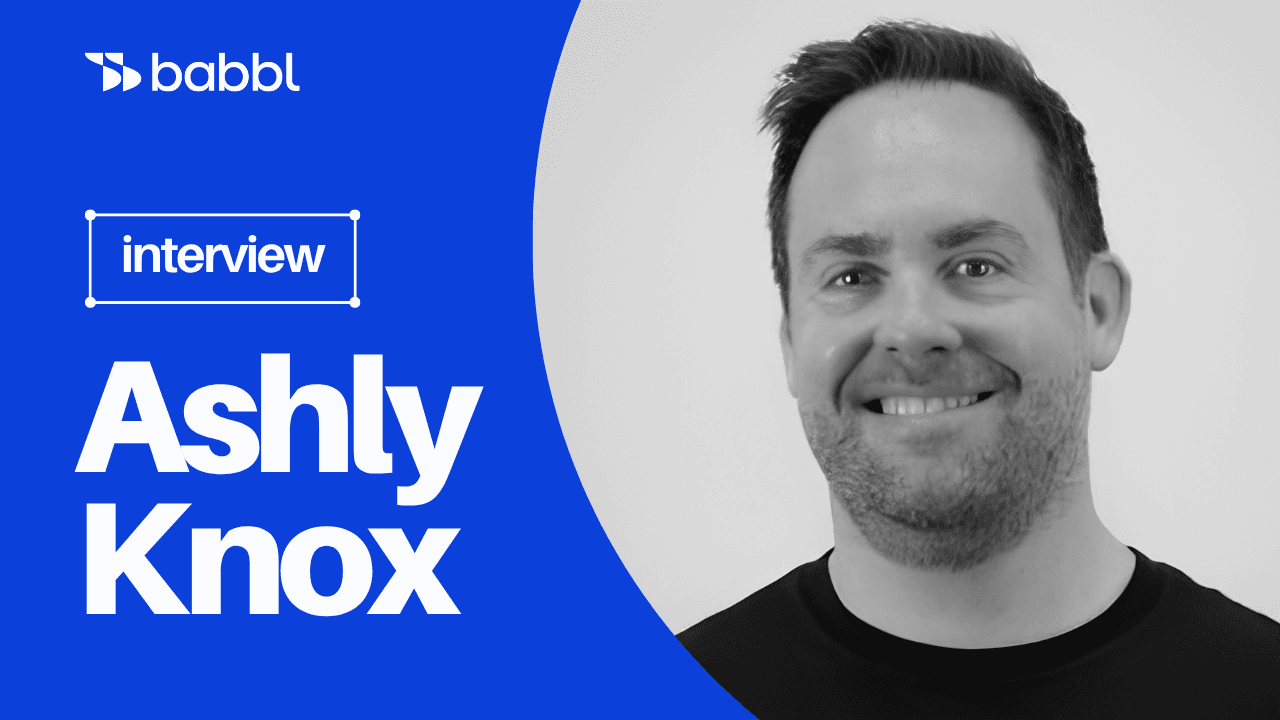
Most brands pick YouTube creators off the same three numbers. Subscribers, engagement rate, audience demographics.
Ashly Knox doesn't.
As CMO, Ashly runs the YouTube sponsorship program at Henson Shaving, a premium one-razor brand that's sponsored creators for about 80 months straight. In most months, YouTube drives 30 to 50% of their revenue, and it's driven 8 figures of revenue for Henson so far. And almost none of the creators they book make men's hygiene or grooming content.
Henson on YouTube
| Months sponsoring creators | About 80, straight |
| Share of revenue | 30 to 50% in most months |
| Revenue driven | 8 figures |
| Paid reads since Dec 2022 | 533 |
| Channels | 292, one read for most |
We sat down with Ashly to learn how Henson has perfected its YouTube program: how he picks creators, what the usual metrics get wrong, and what he wishes the tools measured (ours included).
What Does Trust Actually Mean in a Creator?
Most brands treat trust as a feeling. Ashly treats it as a screen. His word for it is epistemic trust: whether an audience believes what a creator tells them, not just whether they enjoy watching. Here's how Henson got there.
"We instinctively knew that shaving was a mature, low trust category," Ashly says. "Virtually all razors promise a 'smooth shave' but we've all been there: razor bumps, razor burn etc. Literally everyone I know has encountered this."
"The big disruptors in our space, like Dollar Shave Club or Harry's, weren't product disruptors. They disrupted either on price or on distribution (DTC, subscription club). People who did switch often had the same results. So from very early on we liked the idea of other people explaining why our product was better (instead of us)."
"On paper, many of the bottom performers looked the same as channels that had previously worked."
Ashly Knox, Henson Shaving
"The second generalization was that YouTube creators, and perhaps more broadly influencers, are trusted. Perhaps more trusted than a 'razor company.' But there are different levels of trust and different types."
"What really kicked off a deeper understanding was the disconnect between top performers and bottom performers. On paper, many of the bottom performers looked the same as channels that had previously worked."
"This is forever a work in progress for us, but at Henson we're looking for a baseline level of epistemic trust from the creators we partner with. I've read research papers on this topic, but the simplified version is basically being able to trust the person (or creator) as a source of information."
That sounds sort of obvious. But in trying to deconstruct how to assess it, it can get very nuanced.
How Do You Spot It Before You Book?
Ashly's screen starts before he looks at a single number. He reads what a creator chooses to make videos about, then he watches.
"The easiest thing to review is just the video topics," he explains. Two flags, as Ashly sees them:
- Topics that look like they're chasing trends in the zeitgeist
- Topics that are very premise based ("I slept in my fridge for 3 nights")
"What I look for are topics that are more indicative of an actual POV or interest from the creator. Beyond that, to assess their epistemic trust you have to watch the content. Or at the very least, ingest transcripts."
Which Metrics Mislead?
Engagement tells you people are paying attention. It doesn't tell you they believe what they hear. Ashly calls both of these shortcuts traps.
"People assume engagement rate matters, but it's a trap. Yes, high trust creators usually have strong engagement. But strong engagement does not equal high trust."
"Another trap is content category. Just because you talk about the news or politics or science doesn't mean you actually show your reasoning or complicate your assumptions."
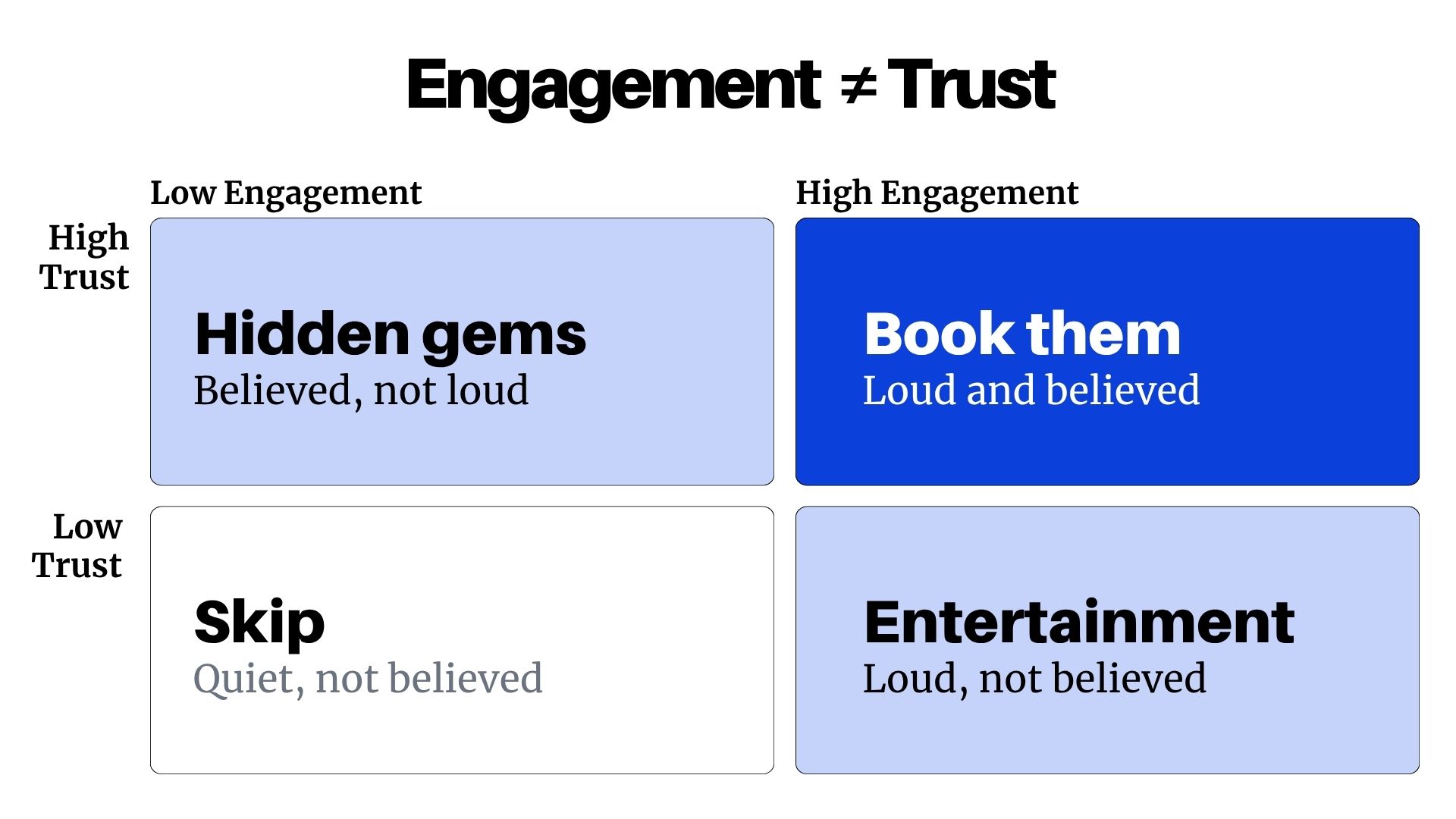
Engagement and trust are two different screens. High engagement on its own lands you in Entertainment.
A Creator No Tool Would Have Surfaced?
Search by category and a razor brand never finds her. Ashly booked her anyway.
"The audience may not agree with everything she says, but they can still form a level of trust because she is so clearly sharing how she thinks."
Ashly Knox, Henson Shaving
Ashly's pick: "A female creator that talks about socio-political issues."
"While the content doesn't seem like a natural fit, she's great at examining an argument from all sides with a willingness to complicate. The audience may not agree with everything she says, but they can still form a level of trust because she is so clearly sharing how she thinks and tackles issues."
Integrated or Dedicated?
Quick definitions. An integrated read is a sponsor spot inside a creator's normal video. A dedicated video is a whole video about the product. Endemic creators make content in the product's own category, like grooming channels for a razor.
"Because we almost never work with endemic creators (lifestyle/vlog/grooming creators are amongst the lowest type of epistemic trust), we can't really do dedicated videos," he says. "We always do ad integrations."
A Henson read inside Veritasium's "How NASA Made The Indestructible Wheel"
Do Sponsorships Really Compound?
A sponsored video doesn't stop working the week it posts. It keeps picking up views long after, so every read you've already bought adds to what this month brings in. Ashly calls that the floor.
"Because the videos have a tail of views, the more videos you sponsor, the more substantial the 'floor' for any given month."
"But really, where you see the biggest compounding is by having 3-4 consecutive strong performing months in a row."
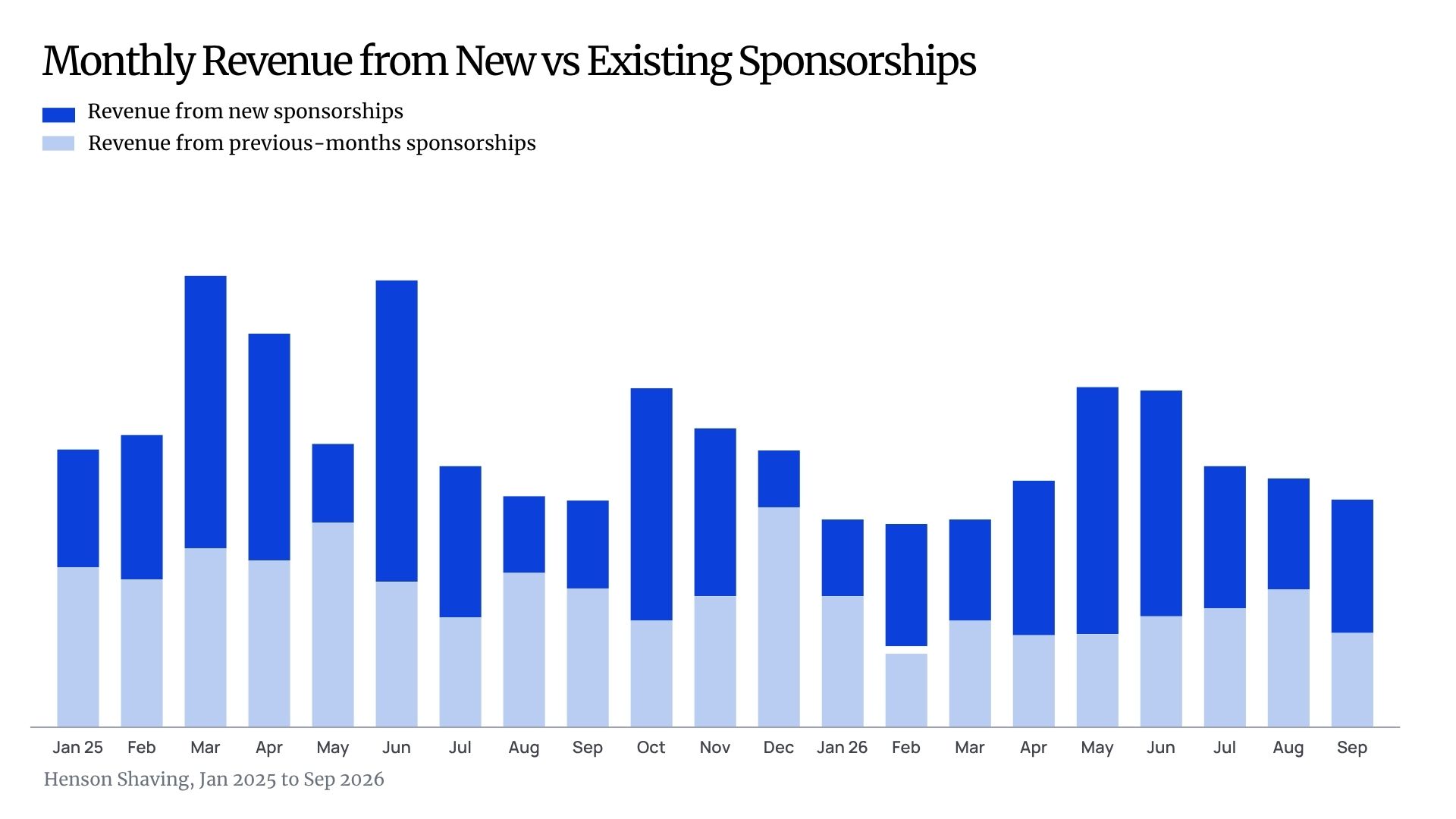
Dark blue is revenue from new sponsorships. Light blue is every older read still paying.
Starting From Zero?
Ashly's advice if you're booking your first creators.
His first piece of advice: "Actually think about what type of mindset a potential client needs to be in to strongly consider your product."
"And care. Care about why things work. Care about why things don't. Don't just look at it as a numbers game, try to understand it. The knock on effect of this is it will better inform your broader brand strategy."
"Don't just look at it as a numbers game, try to understand it."
Ashly Knox, Henson Shaving
What Do You Wish the Tools Measured?
"Uh, Trust."
Same, Ashly. Your thinking is the backbone of how Scout scores trust today.
Find Creators Your Buyers Trust
New to Scout? Scout learns your brand to find and sign your highest-fit YouTube creators, and you approve every move. Describe your brand or import your existing roster, and see which creators Scout recommends, free at babbl-labs.com.
Find creators your buyers trust →
Frequently Asked Questions
What is epistemic trust in creator marketing? Epistemic trust is whether an audience believes what a creator tells them, not just whether they enjoy watching. Henson Shaving CMO Ashly Knox uses it as a booking screen: he looks for creators whose audience treats them as a credible source of information, which is a different test from engagement rate or content category.
Why does Henson Shaving avoid grooming YouTubers? Ashly Knox puts lifestyle, vlog, and grooming creators among the lowest-trust categories for a razor brand. Shaving is a mature, low-trust category where every brand promises a smooth shave, so Henson books creators whose audiences believe them and lets the creator explain why the product is different.
Is engagement rate a good way to pick YouTube creators? Not on its own. High-trust creators usually have strong engagement, but strong engagement does not mean high trust. Engagement tells you people are paying attention. It does not tell you they believe what they hear.
Should a brand run integrated reads or dedicated videos? Henson runs integrated ad reads almost exclusively. Because the brand rarely works with endemic creators, a dedicated video would not fit the channel, so the sponsor spot sits inside the creator's normal video instead.
Do YouTube sponsorships compound over time? For Henson, yes. Sponsored videos keep picking up views after they post, so each read raises the floor for later months. Ashly Knox says the biggest compounding shows up after three or four consecutive strong months.
How many YouTube sponsorships has Henson Shaving run? 533 paid sponsor reads across 292 channels since December 2022, per Scout. Most of those channels carry a single read.
Interview with Ashly Knox, CMO at Henson Shaving, lightly edited for length. Program figures are Henson's own. Read and channel counts: Scout, December 2022 onward.